The Educational Theory of Iñigo de Recalde de Loyola
|
Analyst:
|
|
The Educational Theory of Iñigo de Recalde de Loyola
|
Analyst:
|
|
RETURN
8/18/11
Introduction
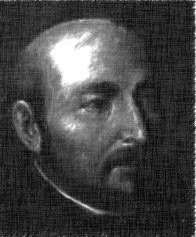
Iñigo de Recalde de Loyola, most commonly known as Ignatius Loyola, was born in 1491 in the Basque Country, the smallest province of Spain, which is located in the northeastern region of the country and near the French border. Ignatius was the youngest of 13 children. He was born into a family of aristocrats. His father, Don Bertram, was Lord of Ognez and Loyola, head of one of the most ancient and noble families of that country. At the age of 15, he worked as a page for a relative, Juan Velázquez, treasurer of Castile to Ferdinand and Isabella, the ruling family of Spain at the time. (Butler, 1926) However, Ignatius was in no way an angel as a child. He and his brother were involved in a brawl, arrested and brought to court. He was acquitted, primarily because of his family connections with well-to-do people (Donnelly, 2004, pg.7). Three years later, Ignatius entered the army. He was a part of many minor battles prior to the battle at Pamplona in 1521 against the French, which would be a defining moment in Ignatius’ life (Butler, 1926).
During this battle, a cannonball struck Ignatius’ legs, bruising his left leg and breaking his right shin. His army was defeated by the French. Ignatius’ right leg was then set back into place on the battlefield. A severely wounded Ignatius was then sent back to the castle of Loyola on a stretcher. However, Ignatius’ bones were not properly set. The physicians broke Ignatius’ bones for a second time and reset them again (Butler, 1926).
After his second surgery, Ignatius was left with a violent fever which left him in a weakened, life-threatening state. His physicians thought he would live for only a couple of days before the fever would eventually take his life. Ignatius received the sacrament of the Anointing of the Sick and was preparing for death. However, during one of his nights resting, Ignatius had a dream that St. Peter came to him, touched him, and cured him from his fever. Ignatius soon began a miraculous recovery from the fever (Butler, 1926).
Because of these surgeries, part of his bone protruded from just behind his knee. Ignatius asked that the bone be cut off and removed so as not to have an obvious deformity. The bone was cut off and left Ignatius with one leg shorter than the other. Ignatius had weights pulling on the bones of his shortened leg in at attempt to have the leg returned to its normal length. However, Ignatius would be left with a permanent limp for the rest of his life. Ignatius was noted for being very brave and courageous during these operations. He never had to be bound to his bed or cried during these operations which were all done without the help of anesthetics, which were not available at the time (Butler, 1926).
Ignatius was confined to his bed for nine months. Just like anyone else who would be confined to a bed for that long, he was bored. He asked for books on knights, chivalry and beautiful women but none were kept in the castle. The only books that were available were books on piety. Ignatius would then read many books, including the one that most influenced him, The Life of Christ. The experience converted this average man into a servant of God who would influence the lives of millions (Donnelly, 2004, pgs. 11-13)
I. Theory of Value: What knowledge and skills are worthwhile learning? What are the goals of education?
After his conversion, Ignatius believed that life was to be lived for Christ and that we are to serve him and each other. He believed in living a lifestyle similar to the saints that he read about during his recovery. This would include not only “the loving God and neighbor or deep prayer but rather striking acts of religious valor, such as severe penances or stringent fasting” (Donnelly, 2004, pg. 12). When Ignatius left his homeland, his main goal was to spread the teachings of Jesus Christ and the Catholic Church and convert people’s hearts to their message. Therefore, Ignatius believed that the only knowledge and skills worthwhile learning would be things that would help us become closer to God, help us become closer to understanding God and help us live a life for Christ. Learning how to pray, how to resist temptations, learning about the life of Christ, and learning to fast and endure strict penances would all be areas that Ignatius believed that we should learn.
“If Loyola’s greatest accomplishment was founding the Jesuits, his second greatest achievement was developing and writing the Spiritual Exercises” (Donnelly, 2004, pg. 78). Just after Ignatius was healthy enough to walk after his injury, he began his pilgrimage to the Holy City, Jerusalem. Ignatius even referred to himself as a “pilgrim” since he was constantly seeking God (Tylenda, 2001, pg. 13). Shortly into his journey he came to a little town called Manresa. It was here that Ignatius reflected on his new life and meditated on how to carry out this new life of serving God. These reflections and mediations later came to be known as The Spiritual Exercises. “The Exercises had two main purposes: to teach people to pray more effectively and to help people who were trying to reshape their lives to find and embrace what they saw as God’s will for them” (Donnelly, 2004, pg. 79).
The Exercises were broken up into four parts called “weeks” (although each part did not last exactly a week) and focused on four main topics: the development of discernment, the ability to discern between good and evil spirits, sin, the consequences of sin and God’s mercy (Wikipedia, 2010); the life of Christ and his teachings and ministry; the last days of Christ including arrest, passion, crucifixion and death; and the Resurrection and Ascension of Christ and how the Holy Spirit’s effect through the Pentecost and even with us today (Oregon Province, 2009). Ignatius would lead others through this process of prayer and reflection in order to help them find God in their lives. The Spiritual Exercises became vastly famous. More than 5,000 copies have been published and they are still used today during Christian retreats.
Ignatius was a very well-educated man. Over a span of ten years, He traveled all over the world taking classes in all sorts of academic areas from liberal arts, philosophy, Latin, logic and physics to, of course, theology. He graduated with a Masters of Arts from the University of Paris. However, Ignatius would only admit that one of these areas was worthwhile learning; that would be theology. Ignatius never spoke of learning mathematics, playing musical instruments, or fostering physical talents. Unless your education allowed you to better serve God, Ignatius would not deem that education very important. It was only through necessity that Ignatius received his formal schooling.
Ignatius did not think formal education and schooling are necessary to have the knowledge and skills that he believed were worthwhile learning. When Ignatius left his homeland on his pilgrimage and to preach the Word of God, he was met with opposition. During this time in Spain was the Spanish Inquisition. The Spanish Inquisition, which started in 1498, was established so that all of Spain would follow the practices of Christianity and adhere to the teachings of the Catholic Church only. Therefore, when Ignatius was preaching God’s word he was met with suspicion by the Inquisitors and imprisoned for his teachings on two separate occasions. “In those days, a layman undertaking to preach on his own, without a license or supervision, was automatically suspected of heresy” (Kiefer). He was eventually released due to the fact that they found no faults in his teachings. However, as part of his sentence, he was forbidden to speak about morality and living a Christian life until he received the proper education. Ignatius did not believe he needed formal schooling but it was required of him and Ignatius was an obedient man. Therefore, Ignatius left Spain for Paris to receive that education. For this reason, it wasn’t until Ignatius was 33 years of age that he actually attended school for the first time.
Upon opening colleges in Spain in 1551, Ignatius sent a letter to fellow Jesuits in Spain and Portugal encouraging them to open more. The letter listed 15 reasons for starting schools, which include: some students will want to join the Jesuits; catechism lessons will deepen their faith and encourage virtues; the Jesuits were also to encourage the townsfolk to support hospitals and refuge homes and other works of charity; and graduates will enter careers in church, government, or business and will bring with them a sense of responsibility for others (Donnelly, 2004, pg. 131).
II. Theory of Knowledge: What is knowledge? How is it different from belief? What is a mistake? A lie?
Ignatius believed that true knowledge came through three sources: God’s intervention, the Bible and the Church. He believed that all three of those were infallible and inerrable. He believed that everything we do should be for the greater glory of God. Following these three would be exactly how Ignatius would live his life.
When Ignatius was lying in his bed recovering from his injury, he dreamt of two things: the romance novels of chivalrous knights rescuing fair maidens and serving God, making a pilgrimage to Jerusalem and living a life of poverty and service to God. The former made him sad while the latter made him happy and joyful. Ignatius took this as a sign from God. He believed that the one dream (knights) was coming from the devil while the other was coming from God. This was a sign to Ignatius about how to lead the rest of his life (Tylenda, 2001, pg. 48).
On Ignatius’ pilgrimage to Jerusalem, he was riding along on a donkey when he came across a Muslim (known then as a Moor). They were discussing the Virgin Mary. The Moor said that he believed that Mary miraculously conceived Jesus as a virgin, but when she gave birth to Jesus she was no longer considered a virgin. Ignatius, who was a firm believer in the all teachings of the Catholic Church and Bible, was outraged. He wanted to kill the Moor for his words. Ignatius did not know what to do. The Moor continued ahead without Ignatius while Ignatius thought about the consequences of the Moor’s words and what actions he should take to defend the honor of Mary. Up ahead there was a fork in the road. One way would lead Ignatius to where the Moor was traveling and the other would keep Ignatius on the road towards his pilgrimage. Ignatius decided that he would let the donkey decide. When he came to the fork in the road, whichever way the donkey chose would decide the fate of both Ignatius and the Moor. If the donkey took the road towards the Moor, Ignatius would kill the Moor. If the donkey chose the other road, Ignatius would simply continue his pilgrimage. The donkey chose the road of the pilgrimage. Ignatius saw this as a sign from God. Ignatius’ life would not have been the same if the donkey chose otherwise (Tylenda, 2001, pgs. 57-59).
The third example is the strongest example to show what Ignatius thought about the teachings of the Catholic Church. One of Ignatius’ more famous quotes is as follows: “That we may be altogether of the same mind and in conformity with the Church herself, if she shall have defined anything to be black which to our eyes appears to be white, we ought in like manner to pronounce it to be black.” (Pearson Education). Ignatius is telling us that no matter if the teaching defies all logic and rationale, what the Catholic Church teaches us is absolute truth. This quote is one of the 18 “Rules for Thinking with the Church” that Ignatius added to his Spiritual Exercises. It is here where Ignatius describes the proper attitude that a Catholic should have towards the Catholic Church and its teachings. He believed that we should set aside our own opinions of the Catholic Church and be strictly obedient to its teachings. Other examples of these rules include: to obey the Church with our hearts and minds, fasting during holy days of obligation, and to commend the construction of churches and ornaments.
Based upon Ignatius’ ideas of what knowledge is, I do not think Ignatius would separate knowledge from belief. Ignatius would say that all of his religious views and thoughts are both his beliefs and knowledge he has gained from God, the Bible and the Catholic Church.
Ignatius first addresses his mistakes after his conversion lying in bed in recovery. After he read the inspiring book The Life of Christ, he reflected on how he has lived his life up to this point and how he will live it from now on. Upon his reflection, he determined that he had lived a very sinful life, a life that was not lived for Christ. He realized that he needed to do a great penance for his previous sins and from here on, Ignatius was to live as the saints did, to “live a life of constant penance” (Tylenda, 2001, pg. 51). When reading about the saints, Ignatius would think? if the saints live this way, then so shall I. Ignatius then prepared an unusually long list of all his previous sins which he went over with a confessor for three days! Ignatius did not take sins or mistakes lightly. He was very detailed in explaining everything he did that went against the teachings of God, the Bible and the Catholic Church. Also, after his three day confession, Ignatius did not feel relieved at all. He kept going to confession as he thought of more and more of his previous sins. He was left with such uneasiness, such guilt, that he even contemplated suicide (Donnelly, 2004, pg. 18).
Secondly, while Ignatius was studying Latin (which he did with little success), so that he could continue to preach to others, he kept getting distracted from his work with daydreams and other thoughts. Ignatius believed that they were coming from the devil, because these thoughts were distracting him from his mission of getting an education that
would enable him to then serve God. Ignatius believes that anything that derails us from serving God is sinful (Donnelly, 2004, pg. 28).
From the examples shown above, it is easy to see what Ignatius considers a lie. A lie to Ignatius would be anything that goes against the word of God, the Bible or the Catholic Church. Again, if something is white and the Church says it is black, Ignatius says we should all believe it is black. God, the Bible and the Catholic Church speak only the truth. To go against their beliefs would be to lie.
III. Theory of Human Nature: What is a human being? How does it differ from other species? What are the limits of human potential?
Just prior to the exercitants (those entering the Spiritual Exercises) starting their spiritual journey through the Exercises, Ignatius had them contemplate over what he called the Fundamental Principle: “Human beings were created to praise and service God and thereby save their souls. All other things were created to help them attain that end” (Donnelly, 2004, pg. 80). Again, one of the main purposes of the Exercises is to reshape the lives of those who enter so that they may live a life that is dedicated to God. Therefore, if this experience is to make one a new person, Ignatius wanted us to reflect on what it means to be a person, a human being.
Ignatius believed in an all-powerful God. Ignatius would admit himself that he does not know the range and extent of God’s power. Since we are all God’s creation, Ignatius would believe that human beings have as much potential as God would like. God has given human beings many different talents and skills that make some better (or worse) suited for tasks in all different aspects of life. Ignatius would not say “humans cannot do…” because he believed that whatever God’s will is, that will be so. If God wants to give human beings or certain human beings a higher potential that might seem unfathomable, then Ignatius would argue that the person or persons would have that potential.
Ignatius believed that all people have the ability and therefore should praise and serve God through strict obedience, penances, the sacraments, mass, etc. However, Ignatius never correlated human potential with the amount of a person’s praise and service. At the point of his life when St. Peter came to him as he was injured, Ignatius was not a person of great faith, praise and service for God.
IV. Theory of Learning: What is learning? How are skills and knowledge acquired?
Learning is merely increasing knowledge. Knowledge, defined above, is something that will help us become closer to God, help us become closer to understanding God and help us live a life for Christ. Therefore, Ignatius would firmly believe that learning does not need to take place in a classroom. Actually, he would argue that more learning takes place outside of the classroom. Remember, the only reason why Ignatius went to school in the first place was because he was ordered to do so if he wished to continue to preach the Word of God.
In fact, much of Ignatius’ early teachings were done through informal conversations. For example, when Ignatius was stopped by the Inquisitors during his pilgrimage to Jerusalem, he would go around town and actively engage people in spiritual conversations. Ignatius told the Inquisitors that during these conversations he is merely “speaking to a few in a friendly manner about the things of God, just as one does after dinner with those who invite us…Sometimes we speak about one virtue, then another, always with praise; sometimes we speak about one vice, then another, always condemning it” (Tylenda, 2001, pg. 126).
Ignatius would also argue that those who enter the Spiritual Exercises are learning more about how to pray and how to live a Christian lifestyle.
V. Theory of Transmission: Who is to teach? By what methods? What will the curriculum be?
Ignatius believed that we are to learn from each other. Above we mentioned that Ignatius would travel to discuss spiritual things with people such as virtues and vices. Ignatius never claimed to have all the answers. In those conversations, Ignatius was receiving knowledge just as much as he was giving it. Through dialogue of such issues, everyone involved in the conversation would learn something that would help them serve God and one another and therefore be better off for it.
The first Jesuits (followers of Ignatius who weren’t actually referred to as “Jesuits” until 1544) began teaching in the late 1530s out of necessity. At the time, there was a shortage of Catholic theologians. Therefore, all Jesuits, who like Ignatius at this time earned a degree allowing them to teach on religious matters, were sent out to all parts of Europe to teach at different schools (Donnelly, 2004, pgs. 127-128).
However, Ignatius eludes that not everyone is suited for teaching. When he passed on The Spiritual Exercise to others, Ignatius “believed that only a minority of Jesuits would have the spiritual wisdom and psychological skills needed to serve effectively as directors” (Donnelly, 2004, pg. 85).
Also, when new Jesuit colleges were opening for the first time, Ignatius would summon his best and most talented priests and have them teach at the school in order to get the school off to a good start. Once those schools were up and running, Ignatius would again take them away from where they were and have them teach at another school that needed a good start as well, which clearly annoyed the students and the parents at the schools that they left.
Ignatius thought that we can learn much from each other about life and how to serve God; however, when it came to the more specific and tougher roles, he preferred to have his elite group teaching.
As stated before, much teaching and learning can be done by informal conversation. However, that is not a fitting way to run a college. The earliest schools had about 50 students in each class. Due to the large number of students, students would rotate having the duty of the class Decurion. The Decurion was in charge of about ten of his classmates. They would direct oral quizzes and report back to the teacher. Class was not in lecture format. Students would not just sit and take notes from the teacher. All students were called upon to participate and to prove their mastery of the lesson through oral sessions. Teachers also used competition to fuel the students’ success. Teachers often held contests in written or oral form of the subject matter. Prizes would include honorable titles such as general or senator. Students who won these competitions were also allowed to read their essays in public forms (Donnelly, 2004, pg. 137).
The school year was nearly year-round (with a week or two break in the summer) and was held six days a week, five hours each day. As I mentioned before, Ignatius was not very scholarly. Although he eventually received his Masters in the Arts, he struggled with the mastery of languages such as Latin earlier in his educational journey in Spain. However, he flourished when he arrived in Paris. Ignatius thought the reason for this was the “method and order of Paris” as it was called. In Paris, courses were taken in sequence: basic courses first; then grammar, rhetoric, poetry and literature; and then philosophy and theology. At other schools in Europe, students chose courses randomly as they would see fit. Ignatius liked the Paris method and adopted it for all Jesuit schools (Donnelly, 2004, pg. 137).
Almost 50 years after the death of Ignatius, a man by the name of Claudio Acquaviva finally completed the Ratio Studiorum (“plan of studies”), which was started by Ignatius. The Ratio Studiorum would outline all the courses that a student would take. This would include the languages such as Latin and Greek. It would also include the humanities (literature, history, drama, etc.). These humanities would only include history, dramas and literature that would be religious in nature, of course, so that they could relate to the main part of the curriculum, philosophy and theology (O’Malley). Aristotle, Cicero and Plato were a major Jesuit influence of the philosophy curriculum because they were philosophers who also stressed good morals (Donnelly, 2004, pg. 135). The Ratio Studiorum would probably be very similar to the curricula that we have and use today.
VI. Theory of Society: What is society? What institutions are involved in the educational process?
Ignatius and his group of followers originally called themselves the Company of Jesus. “Company" was used because of its military sense. They saw themselves as soldiers of Christ. However, written in official Latin documents, they were called “Societas Jesu,” or the Society of Jesus (Pollen, 1910). What would the founder of the Society of Jesus say that society means? Society simply implies a group of people with a common interest or purpose. However, to be more specific, Ignatius and his first six followers saw themselves as “friends in the Lord” and all shared the common interest of sharing this friendship in the Lord with others. Like Ignatius, all six of Ignatius’ first followers did not immediately share Ignatius’ spirit. Ignatius began speaking to these men, whom he met at the University of Paris, about spiritual things like he did with others that he met in his life. After much encouragement, these men underwent the Spiritual Exercises, and from that point forward, were as dedicated to the mission of leading a life dedicated to the service of God as Ignatius.
In 1540, Ignatius wrote down and published what came to be known as the Constitution of the Jesuits. This document, which is very similar to the Rules for Thinking with the Church, was a detailed outline of how the Jesuits were to lead their lives. Such instructions were that Jesuits were to: lead a life of poverty in the name of Christ, educate the children of all classes, confess their sins, administer services to the people according to the Catholic Church, go on foreign missions at the pope’s biddingetc. (Campion). Those that followed this Constitution would also be part of the Society of Jesus.
Two major institutions were involved in the development of the Jesuit schools: the Catholic Church and the government. They both played minor roles, however. Ignatius was the one who came up with the Ratio Studiorum, the curriculum of the Jesuit schools. He was the main influence, although Ignatius would make sure that all curricula coincided with all teachings of the Catholic Church. However, as mentioned before, the Jesuits were to go on foreign missions at the pope’s bidding. In the 1540s, Pope Paul III sent the Jesuits all over the world from Ireland to Italy to India, to found new schools. The government played a role in the financing of these schools. One of the main reasons why Jesuit schools were popular from the beginning was for two reasons: The Jesuits were known as being the best teachers, and Jesuit schools did not charge tuition. Therefore, funding for these schools came from private benefactors or the town governments (Donnelly, 2004, pg. 130). However, the town governments had no say as to what was being taught in those schools.
VII. Theory of Opportunity: Who is to be educated? Who is to be schooled?
Ignatius believed that everyone deserved to be educated. Again, Ignatius would talk to anyone about spiritual things, virtues and vices, and so forth. Who is to be schooled is another question.
Girls did not attend school in the 16th century in Europe. Formal schooling was only for boys. Ignatius’ first schools stressed that his schools “accept for our classes and
literacy studies all boys, rich or poor, free of charge and for charity’s sake without accepting remuneration” (Donnelly, 2004, pg. 131).
Also, if it were up to him, no one would need schooling. Ignatius himself did not attend school until his mission was potentially threatened while he was on trial for heresy. That being said, this would leave three main groups of people who Ignatius would believe needed schooling.
However, it was not Ignatius’ personal beliefs that kept girls away from schooling; society dictated that. In fact, Ignatius found that women were much more accepting to the Jesuit message and lifestyle than men. However, Ignatius was opposed to a female branch of the Jesuits. He believed that Jesuits had to be active members that went out into the communities to spread God’s word and message. In these times, nuns were for the most part confined to their convents (Donnelly, 2004, pg. 145).
Remember, in order to practice and spread the message of religion, you had to have a formal education. Therefore, all men who want to become Jesuits need to be schooled.
Ignatius would also argue that one of the main reasons that he went into the education field was to hopefully train some students to eventually become Jesuits. Jesuit schools were a place of education but also recruitment. Many boys attended these schools because there was no tuition, and so boys from all social classes could attend. The Jesuits hoped that many of their students would become future Jesuits (Donnelly, 2004, pg. 128).
VIII. Theory of Consensus: Why do people disagree? How is consensus achieved? Whose opinion takes precedence?
Ignatius would argue that people disagree only because they are not being obedient to the Catholic Church and their teachings. Again, Ignatius believed that if the Catholic Church says that something is black even though it looks white, then it is black. Under this rationale, if everyone followed Ignatius’ Rules for Thinking with the Church, then there would be no disagreement amongst anyone. The opinion of the Catholic Church is the truth.
Consensus is achieved in two ways for Ignatius: either you believe what the Catholic Church tells you or Ignatius would use his rhetoric to convince you of your wrong ways and his correct ways. With the Ratio Studiorum used by the Jesuit schools, graduates would become masters of rhetoric and therefore very influential speakers. Prior to opening schools in different areas throughout the world, Ignatius and other Jesuits would give elaborate speeches and presentations to the communities to gain support for the school (Donnelly, 2004, pg. 130). This proved to be a very useful tactic.
Conclusion
Throughout most of his life, Ignatius suffered from a stomach ailment which kept him constantly sick and in pain. In 1556, this ailment became much worse. His physicians thought he would live through the rest of the summer of 1556, however, on June 30, Ignatius knew he would be taking a turn for the worse. He sent his secretary to the pope to receive the pope’s blessing before he died. Thinking he had more time, the secretary did not leave right away. He told Ignatius that he was busy with his usual work and that he would leave first thing the next morning. Ignatius preferred that he went right away but did not insist. That night, Ignatius died. He was beatified on July 27, 1609 by Pope Paul V and he was canonized by Gregory XV on March 12, 1622 (O’Neill, 2010).
References
Butler, R. A. (1926). St. Ignatius Loyola - Founder of the Society of Jesus. In The Lives of the Fathers, Martyres and other Principal Saints (volume iii, pgs 104-124). Retrieved April 4, 2010 from http://www.catholicapologetics.info/library/onlinelibrary/ignatius.htm
Campion Jesuit High School. Constitution of the Jesuits. (n.d.). Retrieved April 4, 2010. Website: http://www.bibliotecapleyades.net/vatican/esp_vatican13.htm
Donnelly, J. P. (2004). Ignatius of Loyola, Founder of the Jesuits. Pearson Education.
Kiefer, J. E. (n.d.). Ignatius Loyola, Mystic, Educator, Preacher, and Founder of the Jesuits. Retrieved April 4, 2010, from http://justus.anglican.org/resources/bio/215.html
O'Malley, R. J. W. (n.d.). Introduction. In Ratio Studiorum: Jesuit Education. Retrieved April 4, 2010, from http://www.bc.edu/libraries/collections/collinfo/digitalcollections/ratio/ratiointro.html
O'Neill, R. N. (2010). The Life of St. Ignatius of Loyola. Retrieved April 4, 2010 from http://norprov.org/spirituality/lifeofignatius.htm
Oregon Province, Society of Jesus. The Spiritual Exercises of St. Ignatius. (2009). Retrieved April 4, 2010. Website: http://www.nwjesuits.org/JesuitSpirituality/SpiritualExercises.html
Pearson Education. Rules for Thinking with the Church. (2010). Retrieved April 4, 2010. Website:
http://wps.ablongman.com/long_longman_lwcdemo_1/0,9493,1532993-,00.html
Pollen, J.H. (1910). St. Ignatius Loyola. In The Catholic Encyclopedia. New York: Robert Appleton Company. Retrieved April 4, 2010 from New Advent: http://www.newadvent.org/cathen/07639c.htm
Tylenda, R.J. (2001). A Pilgrim's Journey: The Autobiography of Ignatius of Loyola. San Francisco: Ignatius Press. (Original work published 1985)
Wikipedia. The Spiritual Exercises of St. Ignatius of Loyola. (2010). Retrieved April 4, 2010. Website: http://en.wikipedia.org/wiki/Spiritual_Exercises_of_Ignatius_of_Loyola