The Educational Theory of Maria Montessori
|
Analysts: |
 |
The Educational Theory of Maria Montessori
|
Analysts: |
|
RETURN
edited11/19/18
Introduction
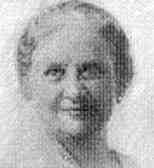
Maria Montessori left a long lasting mark on education around the world. She is regarded as one of the most famous and accomplished educators of her time. Her philosophies and techniques are studied and utilized in universities and schools today. Her life is a story of remarkable perseverance and achievement. Maria Montessori was born in Chiaravalle, Italy on August 31, 1870. She was the daughter of Allessandro Montessori and Renilde Stoppani.
She was described as a precocious little girl, who was always pushing the limits of society. Her parents were both educated, but she grew up in a traditional Italian society where woman were expected to be the central force of the family as wives and mothers. Montessori pushed the limits by deciding to study engineering which was predominantly a male profession at the time. At the age of thirteen Montessori joined a technically school where she was one of two women in attendance. Although she was required to spend recess in a separate room from the men to shield her from torment she was motivated to continue her education and attended the Leonardo da Vinci Technical Institute for high school. She graduated in 1890. (Povell, 2007)
After high school, Montessori was still trying to push the societal limits and she attempted to enroll into medical school. At first her application was denied because of her lack of knowledge in the classical languages. She spent the subsequent two years taking her prerequisite courses and in 1892 she was admitted to the University of Rome Medical School and graduated and became the first woman in Italy to be awarded a Medical Degree. While in medical school, Montessori found herself drawn towards the pathology of “degenerate” child. She worked in the pediatric ambulatory clinic and the psychiatric clinic throughout medical school and continued after graduation. Montessori realized the connection between psychology, science and the education world and began to speak out at conferences about the subject. She studied the needs of special education children and began to establish methods of teaching the so called ‘degenerate’ children in society (Povell, 2007). Maria Montessori was a major influence on the woman’s movement in Italy. She believed in the concept of the “new woman”. She lectured about the “new woman” and urged woman to take a leading roles in educational reform. She was an example of the “new woman” and she used that distinction to motivate woman to fight for their rights and earn the distinction as an equal gender. (Hainstock, 1997)
As a medical doctor, Montessori studied neurology, specializing in mental illness. She later studied psychology and anthropology, specializing in child development. This wide base of knowledge allowed her to examine problems and research from a wide range of perspectives. Following her success in the medical field, Montessori opened a school and developed an educational philosophy which centered around the natural development of children in controlled environments. The school and its innovative yet controversial approach was widely successful. Despite her success Montessori was exiled from Italy by Musilini because she refused to educate children the traditional Italian way. She moved to Spain and then the Netherlands. Montessori died in the Netherlands in 1952, but not before she was nominated for the Nobel Prize three times. Her name and philosophy lives on in hundreds of schools across the world. (Povell, 2007)
Theory of Value
What knowledge and skills are worthwhile learning? What are the
goals of education?
Maria Montessori established much of her theories on education based on the works of the scholar Froebel, and the physicians Jean Itard and Edouard Sequin which inspired her theories of sensory education for early childhood education. Froebel, Itard, and Sequin allowed Montessori to develop a curriculum that utilized experience and hands-on manipulation of materials versus the direct instruction that typically took place in schools. Froebel, Itard, Sequin, and Montessori formed their theories of education from working with special needs children in a particular technique known as sensory education. “…Sequin taught the idiots how to walk, how to maintain their equilibrium in the most difficult movements of the body – such as going up the stairs, jumping, etc., and finally, to feel, beginning the education of the muscular sensations by touching, and reading the difference of temperature, and ending with the education of the senses” (MM, 40-41).
It was this concept of teaching children to experience the world by using the five senses and extending the input to thought processes that Montessori considered to be the most valuable asset to children’s learning. Montessori claims that it is through movement and manipulation of the senses that children would gain knowledge of language, abstract thought, critically thinking and problem solving skills, math skills, independence, practical life skills, and discipline. If students only learn how to manipulate the environment without learning how to understand the meaning of their senses, we as educators, “…have only led these children to adapt themselves to a low order of life (almost a vegetable existence)…[need to lead] the idiot from the vegetative to the intellectual life, ‘from the education of the senses to general notions, from general notions to abstract thought, from abstract thought to morality” (MM, 41).
Montessori’s idea of sensory education included hands on activities that would require the child to tune into their five senses to heightening their intellectually abilities. She was inspired by “…Aristotle’s philosophy that there was nothing in the intellect which does not fit exist in the senses…[and] The hands and mind work together, making the learning experience one of doing rather than simply observing” (Hainstock, 1997, 91-92). When the child uses their senses they become active participants in their education and absorb knowledge through their environment. It was through this analysis of the senses that language and abstract thought developed in children.Not only was it important for children to develop sensory education and an understanding of their senses in the learning process, but it is important for children in Montessori’s learning theories for children to develop practical life skills through linguistic exercises, sensory training and physical activities that “…directly fit the child for the duties of practical life” (MM, 62).
Children learned proper nutrition and hygiene, as well as language acquisition and generalization skills. It was important to Montessori for children to learn the knowledge and skills to live in society. Children also learned to develop self-discipline and independence, which are skills Montessori thought were worthwhile for children to learn at a young age so they can mature into meaningful members of society.Discipline in Montessori’s eyes was the development of self-mastery and motivation to continue the learning process without teacher involvement. Montessori said “Since the child now learns to move rather than to sit still, he prepares himself not for the school, but for life; for he becomes able, through habit and through practice, to perform easily and correctly the simple acts of social or community life. The discipline to which the child habituates himself here is, in its character, not limited to the school environment but extends to society” (MM, 86-87).
It was through this concept of self-discipline that the child learns to independence and practical life skills which will allow the child to live as a meaningful member of society. Montessori thought that practical knowledge was the most important skills a child could learn; “…[children who] learn to walk without assistance, to run, to go up and down stairs, to lift up fallen objects, to dress and undress themselves, to speak distinctly, and to express their own needs clearly…make it possible for children to achieve the satisfaction of their own individual aims and desires” (MM, 97).
In conclusion the knowledge and skills worth while knowing based on Montessori’s vision are sensory education, manipulation of ones environment, practical life skills, and self-discipline. These core skills act as a tool box for children to become active learners and contributing members of society. What are the goals of education?
The goals of a Montessori education were to develop sensory training, language acquisition, arithmetic, physical education, practical life skills and abstract thought through the teaching of the whole child and the integration of the family into the early education system. Montessori began her educational experiences by working with special needs children. At the time of Montessori, special needs children were thought of as a “lost cause”. They could not learn how to become members of society because intelligence was fixed. She strongly opposed to the perceptions on cognitive abilities of these children at the time, and believed that they could learn how to become members of society through special teaching techniques that utilized sensory education and hands-on experience. Her aim was to teach children academics through practical life experiences and to “…to develop the whole personality of the child through motor, sensory, and intellectual activity” (Hainstock, 1997, 35).
Motor, sensory, and intellectual activity (particularly language) are the basis of many of Montessori’s theories of education and the creation of her curriculums. Montessori claims
“Our aim in education in general is twofold, biological and social. From the biological side we wish to help the natural development of the individual, from the social standpoint it is our aim to prepare the individual for the environment…All education of little children must be governed by this principle – to help the natural psychic and physical development of the child” (Hainstock, 1997, 77)
“…The functions to be established by the child fall into two groups: 1) the motor functions by which he is to secure his balance and learn to walk, and to coordinate his movements; 2) the sensory functions through which, receiving sensations from his environment, he lays the foundations of his intelligence by a continual exercise of observation, comparison and judgment. In this way he gradually comes to be acquainted with his environment and to develop his intelligence” (Hainstock, 1997, 79).
Montessori believed that her ultimate aim would be accomplished by allowing the children to manipulate their environment. Not only was it important to Montessori to teach children the practical life skills necessary to live in society, but also to integrate the family into the learning process.
Montessori said that it was the union of the family and the school in the matter of educational aims that would enhance student learning and be more meaningful to both the parents and the child. Montessori said that both home and school were places of social processes and it was important to educate children in both contexts to allow them the skills to generalize lessons learned to their future schooling career and ultimately the greater society. The Children’s House, Montessori’s first school in Rome was placed in a residential building in Rome. The Child’s House provided the family with comfort and assurance. It provided parents with a place where they could leave the child while they had to go to work and in return would receive an education. The chief aims of the Children’s House was to “…offer, free of charge, to the children of those parents who are obliged to absent themselves for their work, the personal care which the parents are not able to give. In the Children’s House attention is given to the education, the health, the physical and moral development of the children. The work is carried on in a way suited to the age of the children (MM, 70).
And when after three years of such a novitiate, the mothers send their children to the common schools, they will be excellently prepared to co-operate in the work of education…” (MM, 64). It was important to incorporate the family into the educational process so that socialization education would take place across environments, allowing the child more opportunities to generalize skills learned to the greater society. “The aim of Montessori education is to foster autonomous, competent, responsible, adaptive citizens who are life-long learners and problem solvers” (Katz, 1990, 11).
Theory of Knowledge
What is knowledge? How is it different from belief? What is a
mistake? What is a lie?
Knowledge, according to Montessori, is life. It is the result of the experience that we gain from manipulating our environment and analyzing our senses that increase our knowledge of the world around us and allow us to live as productive members of society. Montessori’s curriculum requires students to manipulate real life tools to gain an understanding of the world. Montessori said that the more experience we have with the practical life tools the more knowledge that we have gained to better prepare us for society.
Itard’s vision of the environment was one of a caring and nurturing place that awakened the senses in order to train hearing, vision and communication skills. “Knowledge of the physical world was seen as gained through experiences as perceived through the senses. Language could also be gained through sensory experiences. Itard’s approach to education was to awaken Victor’s senses of touch, taste and smell, and later to train the senses of hearing, vision” (Spodek & Bernard, 1988, 7).
Sequin described an environment in which “each act contains both a motor function and a sensory function. Sequin used the physiological exercise of senses and muscles to construct and reconstruct complete circles of acts and he used the exercise of one sense to corroborate the action and verify the acquisition of another sense” (Spodek & Bernard, 1988, 8). It was the interplay of Itard and Sequin’s visions of sensory education that Montessori thought knowledge was acquired. The environment that students would manipulate knowledge and gain experience was an important part of Montessori’s vision. Montessori claimed that the environment influences knowledge. The school is the ideal place to provide a child with more experiences with the physical and social phenomena of the world. It is the collaboration of the physical and the social and the ability to critically think about the experiences that increases knowledge. Montessori created developmentally appropriate and scientifically sound apparatuses for children to manipulate in the classroom. Montessori created materials such as color cards, spool rods, sandpaper numbers, and 3D shapes and these materials needed to be in places that children could see, hear and work with at his/her own leisure. Montessori’s ultimate aim in the development of these materials and her detailed methodology of education was to “…help children prepare for life with a more organized approach to academic skills and problem solving and the development of the child’s independence, self-discipline, and interest in learning” (Hainstock, 1997, 37). It was the interaction between the structured materials and the environment that a student would gain knowledge. To simplify to its purest sense, knowledge is the result of the learning process.
How does knowledge differ from belief?
Montessori labeled beliefs as ideologies and defined them as “…sets of beliefs concerning the things about which we are the most passionate and of which we are least certain” (Katz, 1990, 7). When people rely on ideologies they tend to denounce evidence that would run counter to their beliefs. “Ideologies also generate strong temptations to become doctrinaire, to adhere slavishly to the words and pronouncements of the founding fathers and mothers, and become more rigid in interpreting the sacred texts that the founders themselves might have been” (Katz, 1990, 8). Montessori would claim that these ideologies impeded knowledge.
Knowledge, according to Montessori, is created out of the ability to analyze, criticize, examine, observed, and interpret information in a meaningful way. Knowledge is the manipulation of the environment, the critical reflection of the senses, and the ability to make meaning of the analyzed information. Knowledge is earned through research, motivation, hard work, and interest. Ideologies do not allow for the attainment of knowledge because they deny the evidence that may counteract the belief.
The difference between knowledge and beliefs is that knowledge is backed by research or a defining experience and beliefs are not supported. Beliefs are the result of passion and the influence of others. The child is an active participant in the development of knowledge because they manipulate their own environment. In regards to beliefs, these are often imparted to the student by others. Montessori would want students to use the knowledge learned through the manipulation of their environment to examine the beliefs imparted to them by others. Montessori would believe that knowledge is much more important than beliefs.
What is a lie? What is a mistake?
Lies and mistakes were merely part of the learning process to Montessori. A mistake was used as an educational tool in which the child can learn from, and a lie was a method for the child to critically analyze information. Montessori would likely say that a lie is a form of a mistake in which children learn from untruths by critically thinking about the process. Mistakes were a natural part of the learning process according to Montessori. Montessori thoughts on error are that “…it is well to cultivate a friendly feeling towards error, to treat it as a companion, inseparable from our lives, as something having a purpose, which it truly has…If we seek perfection, we must pay attention to our own defects, for it is only by correcting these than we can improve ourselves…mistakes, to us, have a particular importance…” (AM, 246-247).
She would say that when children work with the environment they will naturally make mistakes and often those mistakes are a critical part of the learning process. It is the repetition of the activity that the child will gain mastery and learn the concept. Montessori would claim that a lie is an untruth which is not rooted, or based on scientific knowledge or research. Lies are an extension of mistakes and can aide students in the self-discovery process that is similar to the learning process children endure while investigating mistakes (Nelson & DeLorenzo, 2010).
Theory of Human Nature
What is a human being? How does it differ from other species? What
are the limits of human potential?
Montessori developed her ideas of what it means to be a human being in a time that education of special needs children was rare and unappreciated. She determined what it meant to be a human being through her research on educating mentally disable children. She placed a strong emphasis on human nature in the development of the family and childrearing practices; claiming “One critical means through which our species can evolve is childraising and education. The way we raise and educate our young is one of the most powerful means we have to choose consciously to evolve through and beyond our current crisis” (Marshak, 2003, 21). Montessori determined that to be human means to have a family and it is within the family that socialization and primary education of young children should take place beginning from birth. Montessori claimed to have a common vision developed from the theories of human development similar to Rudolf Steiner, Sri Aurobindo Ghose, and Hazrat Inayat Khan.
The common vision that Montessori developed answered the following questions: 1) what is the true nature of human beings, 2) what is the course of human growth from birth through age 21, and 3) given this understanding of human growth, what are the desired functions of childraising and education? (Marshak, 2003). The common vision regarding what is the true nature of human beings “…provides a clear set of images of what constitutes human potential, wholeness, and growth throughout childhood. It is both holistic and integrative in character, describing the body, emotions, mind, and spirit, and the systems of interactions among them” (Marshak, 2003, 21). It is the use of these common visions that human unfoldment from birth until age 21 is described as a play of nature and nurture. The human child has an inner teacher to guide their development in which a human can experience the environment in a nurturing setting and grow. Childrearing is described as the interaction between the parent and the teacher to help the human child develop the inner teacher through facilitation instead of direction.
Montessori adopted this common vision of what it is to be a human being in her theories of education claiming that it is because of this inner teacher that children developed at their own rate as they interact with the environment around them. To be human to Montessori means to develop through stages that she thought began with the newborn. Montessori considered a newborn child as a “spiritual embryo” (as quoted in Marshak, 2003, 23). The development of the human child was an interplay of the inner teacher to guide a child’s growth, the involvement of the parent and the teacher, and the ability to think critically about the environment in which a child lived. Montessori determined the development of the human being to be as follows:
|
Birth – 3 years |
Absorbent Mind Sensory experiences |
|
1 ½ - 3 years |
Language development |
|
1 ½ - 4 years |
Coordination and muscle development Interest in small objects |
|
2 – 4 years |
Refinement of movement Concern with truth and reality Awareness of order sequence in time and space |
|
2 ½ - 6 years |
Sensory refinement |
|
3 - 6 years |
Susceptibility to adult influence |
|
3 ½ - 4 ½ years |
Writing |
|
4 – 4 ½ years |
Tactile sense |
|
4 ½ - 5 ½ years |
Reading |
(Hainstock, 1997, 69)This developmental process allows for humans to grow intellectually and achieve Montessori’s ultimate goal which is to develop knowledge at an early age that would allow for a human to live as a meaningful and productive member of society. In summary Montessori said to be human is to have a family and develop the children in that family through education and socialization.
How does it differ from other species?
A human being, according to Montessori is different from other species because of the development process in which a human child grows. It is the ability to manipulate the environment to increase thought and analysis of the world around them that allows humans to progress in a “superior” manner than other species. Montessori would argue that the intellectual ability for humans to think critically in each stage of development allows for the needs and desires of humans to be more advanced than that of an animal who lives to survive instead of transform society (MM, 1964). Montessori also described the needs of humans to be physical and spiritual needs. The physical needs of human beings are: “…food, clothing, transportation, shelter and defense” (Scott, 2006, 32).
The spiritual needs of human beings are: “…art, religion, self-adornment, and communication” (Scott, 2006, 32). It is the needs of the human being, in Montessori’s vision that make humans inherently different that other species that do not posses the same needs, particularly when it comes to spiritual needs. It is the spiritual needs of human beings that allow for the development of language, thought, critical thinking and problem solving skills and the ability to live as a productive and meaningful member of society. Montessori would likely say that the difference between other species and human beings is the ability to think, speak and interact with society (MM, 1964). What are the limits of human potential?
With the aspects of Montessori’s theories of education and the importance of practical life skills, she would likely determine that human potential is limitless. A child that learns to manipulate their environment and develop knowledge to critically analyze and learn from that manipulation makes a person a life-long learner in society. At a time when special needs children were thought to have no potential or place in society, Montessori disagreed. She thought that these children could learn and could become positive contributing members of society through her teaching theories.
The theories of the time were that of Darwin who determined that people had fixed intelligences and predetermined destinies. Darwin’s theory of fixed intelligence (i.e. intelligence was predetermined by heredity and therefore early education could not change later intellectual development) was popular at the time that Montessori began advocating early childhood education. Montessori would have disagreed with Darwin’s theory because she believed that every child had the ability to learn through experience. The experiences a child has can be limitless if they are made available to them, making human potential limitless.
Theory of Learning
What is learning? How are skills/knowledge acquired?
Learning, according to Montessori, comes from manipulation of the environment and the training of the senses. Montessori thought that within every child “There exists…an unconscious mental state which is of a creative nature. [She] called it the ‘Absorbent Mind’” (CE, 85). Montessori says that “…First, he [the child] takes in the world as a whole, then he analyzes it” (AM, 84-85). “…He constructs his mind step by step till it becomes possessed of memory, the power to understand, the ability to think…The discovery that the child has a mind able to absorb on its own account…” (AM, 27-28).
The child’s absorbent mind is the driving force behind Montessori’s theories of how children learn. She claims that children will absorb information from the environment that they are in.“When you walk into a Montessori elementary classroom, you may see a small group sitting on the floor, with an adult facilitating a lesson. Other children will be working individually or with partners or in groups of three or four….And the room is full of pleasant chatter, the cheerful buzz of meaningful, interesting work. There is the look and sound of respect for work in an atmosphere of congenial dignity” (Rosanova, 2003, 8). It is this relaxed and motivating environment that Montessori thought children learned. It is the manipulation of the environment that children develop the “…idea that meaning is both possible and worthwhile…[and] the children acquire knowledge by themselves by working on hands-on projects and reflecting. The children actually discover information” (Rosanova, 2003, 9).
Learning in a Montessori classroom is that of student discovery. The child is the teacher and utilizes the structured materials to enhance learning. Learning comes from “…working repeatedly on logically connected projects in order to satisfy his curiosity, and in order to build his own sense of competence” (Rosanova, 2003, 9). As a child repeatedly works on projects and discovers his/her own knowledge they are bound to make mistakes. Montessori said that it is through these natural mistakes that children learn how to critically analyze and problem solve within the environment without relying on others to solve the problem for them. “Each child discovers mistakes through feedback given by the project materials rather than by the teacher. The teacher avoids pointing out mistakes in favor of self-evaluation by each child. Instead of judging and correcting, the teacher advises the use of different complementary project materials, or “teaches again,” presenting a material from a different angle” (Rosanova, 2003, 9). Learning is doing. It is to experience through discovery, through manipulation, through critical thinking, through mistakes and through problem solving skills. In the process of learning children can gain self-esteem and generalization skills prior to the first grade that will prepare them to become a life-long learner.
How are skills and knowledge acquired?
Learning, according to Montessori comes from reality based, structured and prepared environments. Elizabeth Hainstock (1997) claims“Evidence clearly shows that the early years, from birth to six, are the most formative and are too often wasted by not realizing the child’s true potential. Gradual, sequential learning at this stage can be easy, fun, and important to the developing child. As the sensitive periods show, these early years are when the child learns with the greatest ease and is most responsive to particular phases of learning. To the young child, learning is a natural function of childhood – effortless and challenging, and more meaningful than idle play” (32).Montessori believed that preschool education for children under the age of six was necessary and that children learned from having the freedom to explore and manipulate the environment. She believed that children learned through interacting with their peers and with the specifically designed materials available within the Montessori school.
The environment must be structured and organized. All materials in the Montessori environment must have a specific place, be structured, prepared, aesthetically pleasing and child sized. The organization of the environment is crucial to a child’s learning because that is where children will take in, or absorb the information and therefore learn. It must be child-sized so that the child can access and manipulate the environment. The materials that Montessori developed “…were designed to be self-correcting, and the children thrived on the activity involved with learning…” (Hainstock, 1997, 14). They were auto-instructional in that they did not require a teacher to show the children how to use the materials, the children were able to play with the tool and gain knowledge from it on their own. The teacher was simply there as an observer and a facilitator.
Montessori allowed the children the freedom to choose what materials they wanted to work with as well as who they wanted to work with. “Montessori felt that the children were far less inhibited when learning from their peers. There is much that a child can teach another child more easily than a teacher can. There is mutual respect among the children and a lack of competitiveness that allows them to learn from each other” (Hainstock, 1997, 36). It is not uncommon in a Montessori classroom to see two children working together on an activity one day, and then individually the next.
Mistakes were a natural part of the learning process according to Montessori.She believed that when children work with the environment they will naturally make mistakes and often those mistakes are a critical part of the learning process. It is the repetition of the activity that the child will gain mastery and learn the concept.
An example of a Montessori instructional strategy in which the child is learning the difference between the colors red and blue is as follows:“First period. The association of the sensory perception with the name. For example, we present to the child, two colours, red and blue. Presenting the red, we say simply, ‘This is the red,’ and presenting the blue, ‘This is the blue.’ Then we lay the spools upon the table under the eyes of the child. Second period. Recognition of the object corresponding to the name. We say to the child, ‘Give me the red,’ and then, ‘Give me the blue.’ Third period. The remembering of the name corresponding to the object. We ask the child, showing him the object, ‘What is this?’ and he should respond, ‘Red’” (MM, 177-178).
It is through this direct method as well as the indirect method of Montessori teaching that children learn concepts from concrete to abstract. Montessori also believed that movement was a critical part of the learning process for children. “When the child begins to move, his mind, being able to absorb, has already taken in his surroundings…He does it with his hands, be experience, first in play and then through work. The hands are the instruments of man’s intelligence…” (AM, 27). It is with this movement and manipulation of the environment that the child actively participates in learning and is motivated to do so because the child is able to choose items to fulfill their own needs. Skills and knowledge are acquired through proper environments, socialization, and the ability to construct knowledge. In order to acquire these skills children must be allowed to construct their own knowledge by analyzing their own experiences and mistakes.
Theory of Transmission
Who is to teach? By what methods? What will the curriculum be?
The role of teacher is crucial to the Montessori Method. She thought that home was an extension of school and learning needs to take place in both environments. With that said both the parent and the school teacher must teach. Montessori says that the mothers “…influence on young children is strong…His ‘explosion of learning’ comes about with your help. The home environment is a natural source of learning and discovery for the child” (Hainstock, 1997, 43).
The school teacher is an integral part of the home and school environment. The school teacher, like the mother, needs to be a nurturer while at the same time not impeding on the child’s self discovery. In order to be a teacher at a Montessori School the individual must be well trained in Montessori’s methods and beliefs. Montessori was very scientific in her research and methods and would expect her teachers to be well versed in them also. Montessori’s methods of teaching are explained further in the following section. The role of the teacher is a shared responsibility of the parent, specifically the mother, and the school teacher. By what methods?The Montessori methods plays a very specific role. Children in the Montessori school guide their own learning through work with the prepared environment. The children manipulate materials and increase knowledge through work. The role of the teacher is to observe the children at work and interject only when necessary. In a Montessori school “…the teacher teaches little and observes much…For this reason I have changed the name of teacher into that of directress…The directress…must have a clear idea of the two factors which enter into her works; the guidance of the child, and the individual exercises” (MM, 173).
Montessori tried to deemphasize the role of the teacher in the classroom so that unlike a regular classroom the teacher is to take a back seat and observe student learning; but the role of the teacher is still very significant because through this observation the teacher is able to push the student to higher levels of thinking. Montessori considered the teacher the keeper of the school, which is her first consideration. The teacher must make sure that the environment the students work in is clean and organized, “…with everything in its place, dusted, bright and cheerful…All the apparatus is to be kept meticulously in order, beautiful and shinning, in perfect condition. Nothing may be missing, so that to the child it always seems new, complete and ready for use” (AM, 277-278).
It is the directress’s responsibility to make sure that the materials in which the students will gain knowledge from are readily available to the children. Montessori also had strong opinions on how a teacher should look in her classroom: “…the teacher also must be attractive, pleasing in appearance, tidy and clean, calm and dignified…The teacher’s appearance is the first step to gaining the child’s confidence and respect…”(AM, 277-278). It is imperative in a Montessori classroom that the teacher takes the role of the observer. Student’s gain knowledge through work and play and the teacher must facilitate that process. The directress of a Montessori classroom is an observer of student behavior. She watches the children manipulate the materials and only interjects when necessary. Montessori clearly outlines how a teacher should conduct “lessons” in the classroom:
“…the teacher must not limit her action to observation, but must proceed to experiment…In this method the lesson corresponds to an experiment…The lessons…are individual, and brevity must be one of their chief characteristics…Another quality is its simplicity….The third quality of the lesson is its objectivity. The lesson must be presented in such a way that the personality of the teacher shall disappear. There shall remain in evidence only the object to which she wishes to call the attention of the child (AM, 108).…The teacher shall observe whether the child interests himself in the object, how he is interested in it, for how long, etc., even noticing the expressions of his face. And she must take great care not to offend the principles of liberty (MM, 107-109). …The essential thing is for the task to arouse such an interest that it engages the child’s whole personality (AM, 206).”
The teacher must take on the belief that the child will grow intellectually and socially as the teacher diminishes. The student will show their knowledge growth by interacting with more stimulating materials in a more complex way. The teacher in a Montessori classroom is supposed to only interject when the child needs further stimulation or the teacher observes the need for the child to move onto more complex materials and concepts. The teacher “…must intervene to lead the child from sensations to ideas – from the concrete to the abstract, and to the association of ideas…” (MM, 224). The teacher is to show the child how to work with the materials and then allow them to work independently and with others. It is with the observation and repetition of the exercises that the child learns. The teacher must make sure that they do not insist on repeating lessons and they do not make the child feel as if they have made a mistake. According to Montessori, it is through mistakes that we learn.
What will the curriculum be?
It is by allowing the child to manipulate the structured and prepared environment that students will learn. She thought that children should master the following concepts through experiences with her structured and prepared materials: Sensory education, language, writing and reading, arithmetic, imagination, and fantasy, art and music, physical education and nature. Language to Montessori is “…the child’s most remarkable intellectual achievement” (Hainstock, 1997, 94).
Vocabulary in a Montessori school takes place daily and is encouraged through self-expression, lessons, and freedom of choice. The acquisition of language lays the foundation for writing and reading education. Montessori believed that writing precedes reading; that children begin to write without instruction through drawing and play. “Progress in writing is marked by the parallel development of the written and spoken language” (AM, 173) and “When we present a letter to the child and enunciate its sound, he fixes the image of this letter by means of the visual sense…when he sees and recognizes, he reads, and when he traces, he writes” (MM, 280-290). Knowledge of arithmetic, according to Montessori is gained through repetitive use of materials such as sandpaper numbers, rods, and spindle boxes so that children can understand the concrete knowledge of numbers before gaining knowledge of the abstract meaning of numbers and math concepts. Critics of the Montessori Method claimed that she neglected the idea of imagination and fantasy because Montessori thought that student’s learned through experience with the real world, and imagination was not an imitation of the real world. Montessori thought that if imagination was based in truth, it was a great way for children to experience the real world through creativity (Hainstock, 1997).Music, creativity and art take place in a variety of forms within the Montessori day by teaching children “…music theory, rhythm,…art work, too, is individualized, since it is done when the particular child feels the need” (Hainstock, 1997, 33).
Montessori advocated for physical education, but desired specific and “…varied exercises to aid the children in muscular control and coordination of movements, while exercising different parts of the body…exercises pertaining to correct carriage, the respiratory system, speech habits, and exercises for the fingers were all of equal importance” (Hainstock, 1997, 103). Montessori had a specific, detail and purposeful method to aid children in gaining knowledge. Most of her theory allows for the children’s freedom of expression within the prepared environment of a Montessori school. Montessori was very precise when it came to how a teacher was to impart knowledge on a student, such as observing student behavior with the prepared materials and only interjecting when necessary to push the student to the next level. The curriculum was meant to teach Sensory education, language, writing and reading, arithmetic, imagination, and fantasy, art and music, physical education and nature.
Theory of Society
What is Society? What institutions are involved in the educational
process?
Maria Montessori developed her educational method in the early 1900’s. She opened her first school, Casa dei Bambini, in Rome in 1907. During that time period, the role of the child was to be seen and not heard and adults had all the power. However, Montessori believed that children had a higher intelligence than the adult. (Hainstock, 1997) It was also a time period where children before the age of 6 were not formally educated. During this time period, the upper class children showing bright futures were given most educational opportunities. This left lower class families with little options for education. It also left children with learning disabilities no options. Montessori set out to change this with her method.
The societal and cultural powers were a lot for any educational renaissance man to overcome and seemingly impossible for a woman. This was a time period where men held all the power and elite jobs and women were responsible for taking care of children and the home. Montessori was an iconic figure in the feminist movement in Italy at the time. She was the first female doctor in Italy and she often gave lectures and speeches in support of the feminist movement (Povell, 2007). She was determined to change societies views of the role of the woman by proving a role model to all women.
To answer the question, society was a system designed to reaffirm and maintain classes. The rich stay rich, the less fortunate stay less fortunate, and men run everything. Society is a system awarding great advantages to the elite, strong and male. Society favors those who can accomplish the most with the least amount of help. Montessori recognized these shortcomings in our society and set out to change one, the education of our children. Montessori began this process of transformation in her first school, the Children’s House, in which
“…the people…were poor, honest, but without any particular profession. They lived from day to day on chance of work…They lived surrounded by people who were coarse and immoral. And all of these unfortunates housed in the rebuilt apartments were without exception illiterate. The children worked together in a kind of common paradise. Because of their parents’ ignorance they received no education from their families. Neither were they influenced by the ordinary type of education that children receive in school” (D, 38-41). In the process she caused social change far exceeding her expectations. Montessori was challenged by many barriers in her attempt to change the face of education for young children both male and female from poor families and uneducated backgrounds.
In many ways society was Montessori’s enemy. Society is what she was trying to undo. She hated the male dominated culture and the lack of opportunities for the less fortunate. Rather than fighting the enemy Montessori decided to change it. Montessori found the society in which she lived to be primarily a conflict model, in which the haves had everything, while the have-nots were left to fend for themselves. She sought to change society from this conflict model to that of an individualistic society where all children, regardless of background or ability could become educated and active members of society (Clabaugh, 2011). She changed it by implementing society into her school model. Montessori said that society is a system of family. She thought that school should be an extension of the family, where education takes place in both environments and allows children to generalize information learned to adapt and accommodate the bigger society in which they live.
In short, society was a necessary evil to Montessori. Rather than fight that evil she worked to change it. Society as she knew it was a male dominated machine meant to hold down the less fortunate. Montessori decided to change society by implementing it into her method as an extension of her school consisting of a family systemWhat institutions are involved in the educational process?Montessori believed that to learn is to experience. In turn she would have said that every influence in a child’s life is involved in the educational process. She utilized practical life experiences because children have an inherent desire to imitate the things around them. (Hainstock, 1997) Whether it is family, school, culture, or society, children have the desire to imitate the things they are surrounded by. In the process of imitating these institutions the process of learning occurs from the resulting experience. The most common of these institutions in the child’s life would the most often imitated and therefore the most important.
Elizabeth Hainstock (1997) clearly sums up the important institutions involved in the educational process by stating that:
“The home, which is the child’s first learning environment, is the ideal place to begin Montessori, and the mother is the most logical first teacher for the child. It is she who is most interested in his well-being and spends the greatest amount of time with him in his early, formative years…The home environment is a natural
source of learning and discovery for the child. By scaling things to his size and making things more easily accessible to him, you will greatly facilitate his learning to help himself function on his own in this environment” (43-44). The environment of a Montessori classroom is meant to feel similar to a child’s home in which everything is scaled down to child size and allows for the child to discover knowledge. Educational materials developed by Montessori for the classroom were established to provide the child with what “…is needed…in his stages of development, and each piece of apparatus serves a specific purpose. It is an environment in which the child functions freely, fulfilling his own inner needs” (Hainstock, 1997, 34) that allows for the generalization from the home to the school and to the greater society. The classroom is therefore an extension of the home in which the child can feel comfortable learning at his/her own pace.
Montessori advocated for the education of early childhood children. She thought that if young children learned how to critically think, manipulate, and analyze the world around them before entering primary school, they would become life-long learners and therefore “better” members of society. It was in the home and in the school that this learning should take place. Montessori began the Children’s House, in which she placed the school directly in the apartment building of the children she was seeking to educate. The family had the opportunity to work with the teachers, the students and the environment to aide in further learning of their children. Parents also could assist with the socialization process of young children by actively participating in the schooling process. In summary, any consistent institution in a child’s life can be involved in the educational process, and Montessori believed that the two most important are the home and the school. (MM).
Theory of Opportunity
Who is to be educated? Who is to be schooled?
In order to fully answer this question we must establish the difference between education and schooling. To educate someone is to deliberately teach them something new. Schooling is the formal setting in which education takes place (Clabaugh, 2011). Now that the definitions of education and schooling have been established, Montessori’s thoughts on who is to be educated and who is to be schooled can be adequately established.
She was interested in proving that children of any ability or background could learn and become a contributing member of society. Montessori worked with special needs children when she was a medical doctor. She developed a passion for helping these children and quickly realized that many theorists of the time neglected their educational needs because of the belief that special needs could not learn. At that time education and schooling was reserved for the rich, upper class children who had bright futures. There were little educational options for poor children and no options for children with special needs. Montessori decided to help educated these children by developing a school and educational theory (Povell, 2007).
Montessori believes that everyone should be educated regardless of age, gender, race or class. She believed that education is simply a result of an individual’s experiences. Human beings are constantly educating each other and themselves through experience and that cycle never stops. Education is a never-ending phenomenon that must continue throughout an individuals’ life in order for them to progress in society. Education is the basis for existence. Once you stop being educated you stop experiencing and in turn stop living.
As evidence by her opening a school in the slums of Rome, Montessori thought that everyone should have an opportunity to be schooled. The Children’s House was a prime example of Montessori’s idea that everyone should have the opportunity to attend school and be educated. The Children’s House was strategically placed in a poor housing complex in Rome with the idea that lower income families with special needs children, ages 3-6 would be provided the opportunity for schooling. In was in this school that Montessori demonstrated that education can and should be available to all children. The Children’s House provided the students and their families with the education needed to continue in traditional schools. Montessori thought that school should be a direct extension of the family, regardless of race, class or gender. The child and their family should have a school, which offers experiences to enrich the educational process. As the Montessori method evolved, students of all socioeconomic status and abilities were given the choice to attend a Montessori classroom. Montessori did not deny education or schooling to any child willing to be educated.
Theory of Consensus
Why do people disagree? How is consensus achieved? Whose opinion takes
precedence?
It is in human nature to disagree. With education comes thought and with thought comes belief and feelings. It is natural for humans to hold strong to their own thoughts and feelings and this leads to disagreement among individuals. Montessori strongly advocated for the promotion of individual thinking and learning. In the times of temple schools this was frowned upon. The teachers simply taught what the students should know and the students had little control over their own education. This created a society controlled by the men of power and only their opinions mattered (Clabaugh, 2011).
Montessori thought that children should build their own knowledge. This in turn created individuals that challenged authority and knowledge. This led to disagreement. Disagreement occurs when educated individuals are willing to challenge the beliefs and systems of others, especially those of power.
The major disagreement over Montessori’s theories is between traditional educators and progressive educators. Traditionalists are opposed to Montessori’s unique approach to education, while progressives appreciate and support her method. The following criticisms are examples of those who disagree and the response Montessori would provide:
“The Montessori method deprives children of their childhood by introducing cognitive learning at such an early age” (Hainstock, 1997, 32). Traditional educators would say that introducing such cognitive learning would in fact impose on further education, while progressive educators, such as Montessori would say that according to developmental theories, birth to age three is a prime time for introducing such cognitive learning. “As the sensitive periods show, these early years are when the child learns with the greatest ease and is most responsive to particular phases of learning” (Hainstock, 1997, 32).
“Will the child with a Montessori background be able to adjust socially and academically to his peers in public school?” (Hainstock, 1997, 37). A traditional educator would claim that because of the free choice and limited teaching in a Montessori school the child would be maladjusted to the more structured and direct methods of teaching in public school. A progressive educator would claim that a child with a Montessori background “…will arrive at any school eager to learn and everything will be different, which in itself is a challenge that the child enjoys. Socially he will adjust well because he is used to working closely with his peers and sharing ideas…” (Hainstock, 1997, 37).
“There is too much emphasis on ‘practical life’ exercises” (Hainstock, 1997, 35). A traditional educator would disapprove of the practical life exercises because without the basic knowledge that is imparted on students in the school setting practical life exercises are useless. Montessori and fellow progressive educators would claim that is the activities and exercises of practical life that students gain a deeper understanding of the basic knowledge and are able to generalize information to the world. The practical life exercises are “…done purposefully to take advantage of the child’s desire to imitate things that he sees around him and to help him learn to function in his own environment. More important, each exercises is a potential occasion for the concentrated activity associated with ‘normalization’ and is preliminary to more advanced learning” (Hainstock, 1997, 35).
In conclusion, Montessori thought that disagreement was a result of humans acting as individuals and developing their own knowledge, beliefs and opinions through their own personal experiences. Disagreement occurs when individuals challenge the knowledge, beliefs or opinions of others. There are many disagreements over the Montessori method between traditionalist and progressive educators. The progressives tend to support her and traditionalists to challenge her. Based on her research and theories, Montessori would look at these arguments as a positive extension of the learning process.How is consensus achieved?Montessori would likely say that consensus can never be achieved and ultimately should not be achieved. Learning is the process of experiencing the world around us and interpreting that sensory input in a cognitive and analytical way. It is not possible because everyone experiences and interprets the world differently and in turn, we learn to read the world around us and generalize knowledge that could help transform society. Consensus would ultimately mean that the learning process has stopped and people no longer critically think about the world and how to live in it.
Montessori thought that the conflict model of the society that she lived in should be altered towards an individualistic society in which everyone is given the opportunity to benefit them selves while working peacefully together (Clabaugh, 2011). This individualistic society that Montessori would consider ideal would say that consensus should only be achieved when it comes to personal gains, unfortunately people have different and individual goals to achieve and therefore consensus will only occur while working towards achieving those goals.
Consensus is not possible because as humans we learn from experience and every individual’s experience is different. As we learn from our experiences we develop personal feelings, beliefs and opinions. These individualistic ideals of society bring on disagreement and conflict. Montessori thought that our individualistic society was not capable of consensus and the only way to achieve it would be for the learning process to come to a complete halt. If learning came to a halt then society and the human race would seize to exist as well.Whose opinion takes precedence?In the conflict society that Montessori established her educational theories in, the rich man’s opinion took precedence. Montessori disagreed and thought that the child’s opinion of how and what to learn should be the forefront of education. Montessori described that society labeled adults to be superior to children, but she thought that children were in fact the superiors. Children held the power and adults should be listening to them. (Hainstock, 1997)
Montessori modeled her educational method around the experience of the individual. She believed that the individual must construct their own knowledge by manipulating their environment. As a result of this belief, Montessori would have said that the individual’s opinion takes precedence. In the case of education that individual is the child. The child should be listened to and their opinion should take precedence over all others because it is their educational experience.Based on Montessori’s belief that children are superior, and her individualistic methods, the opinion of the child takes precedence. Children are constantly evolving and developing and they know what they need more than any adult. It is their education and they should not only have a say, but their voice should be heard the loudest.
SOURCES
Clabaugh, G. (2011). Class notes.
Hainstock, E.G. (1997). The essential Montessori. New York, NY: Plume Publishing.
Montessori, M. (1967) The absorbent mind. New York, NY: Henry Holt and Company, LLC.
(AM) Montessori, M. (1964) The Montessori method. New York, NY: Schocken Books, Inc.
(MM) Montessori, M. (1965) Dr. Montessori’s own handbook. New York, NY: Schocken Books, Inc.
(H) Montessori, M. (1966). The secret of childhood. New York, NY: Fides Publishers, Inc.
(S) Montessori, M. (1974). Childhood education. Raleigh, NC: Contemporary Books, Inc. (CE)Montessori, M. (1967). The discovery of the child. New York, NY: Fides Publisher Inc.
(D) Povell, P. (2007). Maria Montessori: portrait of a young woman. Montessori Life: A Publication of the American Montessori Society, 19(1), 22-24.